
From the editor’s desk
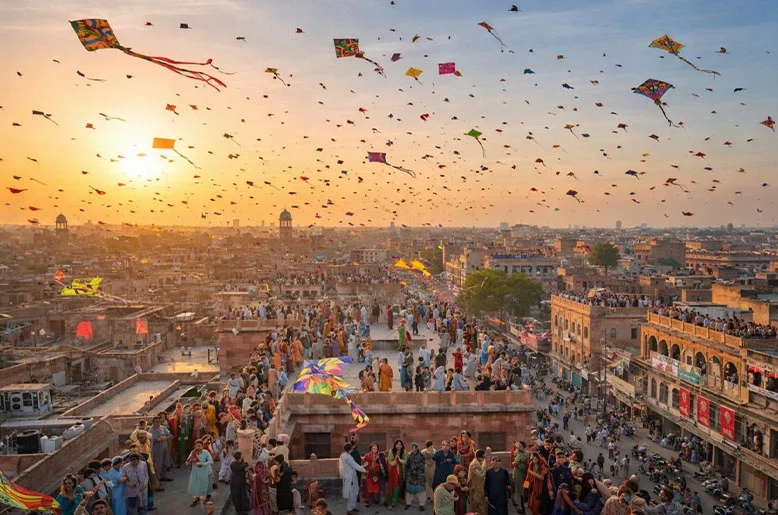
As spring approaches, the anticipation around Basant once again stirs the cultural imagination of Punjab. More than a festival, Basant has long symbolised colour, renewal, and the collective joy of public space. Its gradual return — cautious, regulated, and mindful of past excesses — reflects a broader shift underway: a province attempting to reconnect with its cultural rhythms without abandoning responsibility. Culture, after all, flourishes not in chaos, but within order.
Punjab’s cultural revival today is not limited to nostalgia-driven celebrations. It is visible in the reclaiming of public spaces, renewed interest in heritage, and a conscious effort to balance tradition with safety and inclusion. This renewed emphasis signals an understanding that culture is not an accessory to governance; it is one of its outcomes. When citizens feel secure and engaged, cultural expression follows naturally.
This brings us to the performance of the Punjab government, which in recent months has demonstrated a more responsive and visible style of governance. Whether it was the management of heavy snowfall in Murree or swift administrative action following a tragic incident at a civic work site, where a woman and her daughter lost their lives after falling into an open manhole, the message has been consistent: negligence will not be ignored. Accountability measures, departmental action, and public communication have all pointed toward a governance model that prioritises responsibility over rhetoric.
Chief Minister Maryam Nawaz has positioned her administration around visibility, decisiveness, and delivery. Her approach signals continuity with a governance tradition that emphasises administrative control, rapid response, and citizen-facing performance. This is particularly significant in a province where governance failures are immediately felt by millions.
At the federal level, leadership under Prime Minister Shehbaz Sharif is setting the broader direction within which provincial governance is unfolding. This was evident in Davos, where Pakistan signed the Board of Peace initiative in a high-level setting attended by President Donald Trump. On the sidelines of the World Economic Forum, the Prime Minister also met the IMF’s Managing Director, who publicly acknowledged the extent of Pakistan’s efforts to stabilise its economy after a prolonged period of stress.
Equally significant have been people-to-people and soft-power gestures: the resumption of direct flights between Dhaka and Karachi after fourteen years, Pakistan’s diplomatic support for Bangladesh on international sporting platforms, and the presence of the Australian cricket team in Lahore — all reinforcing a narrative of normalcy, openness, and engagement.
Culture thrives where governance works and confidence returns. Punjab’s revival, as explored in this issue, is therefore not merely symbolic. If sustained, it may well become a durable expression of performance-led governance, rooted in accountability, reinforced by leadership, and sustained by public trust.

Lorem ipsum is placeholder text used in design to show how a layout will look before the real content is added.