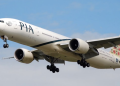

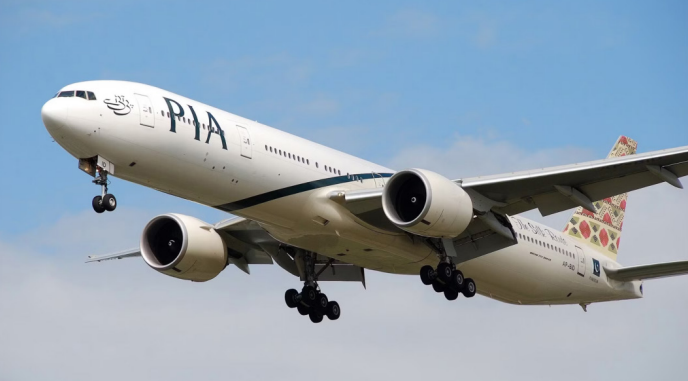
Pakistan International Airlines (PIA), once an emblem of national pride and a pioneer among global airlines, has officially entered a new chapter in its history: privatisation. In December 2025, the Government of Pakistan successfully sold 75 per cent of its stake in PIA to a private consortium led by the Arif Habib Group for a total bid of Rs135 billion (approximately $482 million), marking a decisive shift in economic policy and state enterprise reform.
This transaction is more than just a business deal; it is a milestone in Pakistan’s economic reform agenda. While it has drawn global attention and stirred public debate, its significance goes far beyond headlines. A clear understanding of the background, economics, and future implications reveals why this decision has the potential to be transformative for Pakistan’s economy.
Understanding privatisation
Privatisation, at its core, refers to the transfer of ownership, either full or partial, of government assets and enterprises to the private sector. It is a policy instrument widely used by governments to improve efficiency, reduce fiscal burdens, enhance competitiveness, and attract investment. This process can take various forms, including direct sale of shares, public offerings, management contracts, or public-private partnerships.
Across the world, privatisation has frequently been used to revive loss-making or strategically misaligned state enterprises by introducing market discipline, professional management, and improved governance. For many countries, it has served as a corrective mechanism where state control has failed to deliver efficiency or sustainability.
Why PIA privatisation was necessary
PIA’s decline over the past decades was not the result of a single failure but of entrenched structural inefficiencies, persistent political interference, management weaknesses, financial stress, and operational mismanagement. As a state-owned enterprise, the airline became increasingly unsustainable. Years of political appointments, overstaffing, inefficient fleet utilisation, and mounting liabilities steadily eroded its financial position.
To keep PIA operational, successive governments were compelled to provide repeated subsidies, diverting scarce public resources away from health, education, and infrastructure. Operational inefficiency also left PIA at a competitive disadvantage in the global aviation market. In an industry where fleet modernity, service quality, cost efficiency, and customer experience determine success, PIA’s rigid, state-controlled structure limited its ability to adapt and innovate.
National pride is best reclaimed through performance rather than symbolism.
Pakistan’s broader economic context further underscored the need for reform. Under successive agreements with the International Monetary Fund (IMF), the reduction of fiscal losses from State-Owned Enterprises (SOEs) has remained a central policy objective. The privatisation of major SOEs, including PIA, formed part of a wider roadmap aimed at strengthening public finances, restoring macroeconomic stability, and improving investor confidence.
The aviation sector is inherently capital-intensive, requiring continuous investment in aircraft, maintenance infrastructure, human capital, and route development. Government budgets, already under strain, have struggled to meet these demands without compromising other national priorities. Private ownership offers access to fresh capital, strategic partnerships, and long-term planning capacity — elements essential for the airline’s revival.
Restructuring and sale
The privatisation of PIA was not a sudden or impulsive decision. It followed years of policy debate, failed attempts, and institutional learning. Earlier efforts to privatise the airline were hampered by weak investor interest, valuation disputes, and the burden of legacy debt. Recognising these constraints, the government undertook a strategic restructuring between 2024 and 2025 to make the airline investible.
Under this plan, PIA’s core airline operations were separated from its historical liabilities and non-core assets. The airline was reorganised under PIA Holding Company Limited (PIA Holdco), with passenger services, cargo, ground handling, training, and catering retained within the core entity. Legacy debt and non-essential assets were placed outside the operating structure, significantly improving transparency and investor appeal.
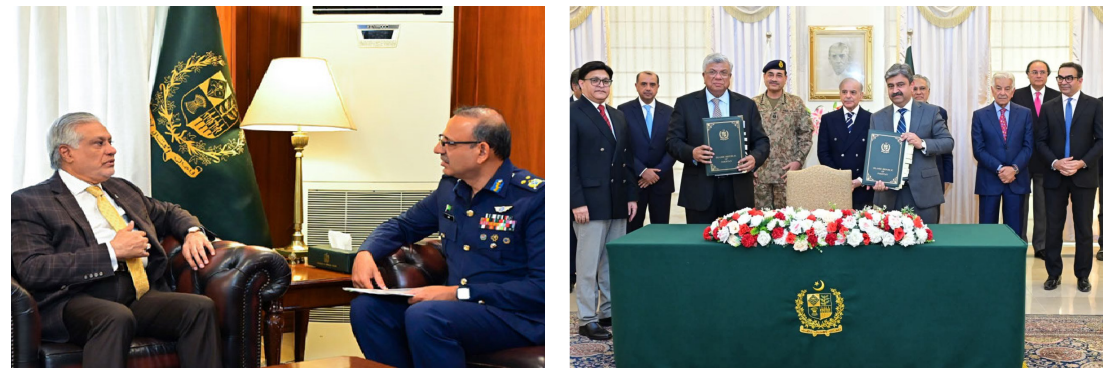
These reforms laid the groundwork for a credible and competitive bidding process. The eventual auction in late 2025, conducted transparently and broadcast live, resulted in a winning bid by a consortium led by the Arif Habib Group, one of Pakistan’s most diversified and established investment firms. The consortium also includes prominent Pakistani businesses such as Fatima Fertiliser, City Schools, and Lake City Holdings. Their bid of Rs135 billion exceeded the government’s reserve price, signalling strong investor confidence in the airline’s prospects.
Under the terms of the deal, the government retains a 25 per cent stake, ensuring continued oversight and alignment with national priorities. Notably, over 90 per cent of the bid value is committed to reinvestment within PIA for operational revival, fleet acquisition, and efficiency improvements.
Economic rationale and strategic gains
Despite political noise, the economic rationale behind PIA’s privatisation rests on well-established principles. The airline had long been a drain on public finances, and privatisation relieves the state from the burden of repeated bailouts. This fiscal relief allows public funds to be redirected toward more productive and socially beneficial sectors.
Private ownership enables the infusion of capital required for fleet modernisation, service enhancement, technological integration, and route expansion, without straining government resources. Market discipline incentivises efficiency, cost control, and customer-centric management. International experience demonstrates that airlines such as British Airways and Air India improved their performance and market positioning following privatisation under professional management.
Privatisation should be seen as modernisation, not surrender.
A revitalised national airline can also play a significant role in boosting tourism, facilitating business travel, and enhancing Pakistan’s global connectivity. Improved international routes and service quality translate into higher foreign exchange earnings and broader economic spill-overs across hospitality, logistics, and services.
Political propaganda vs facts
The privatisation has, predictably, attracted political criticism. Some opposition voices have portrayed the move as “selling national assets” or undermining sovereignty. Such arguments often equate national interest with state ownership, regardless of performance outcomes. In reality, national interest is better served by economically viable institutions that contribute to growth, employment, and international credibility.
A transparent and successful privatisation builds confidence among both domestic and international investors in Pakistan’s policy continuity.
The PIA transaction was not a distressed sell-off. The valuation reflected market conditions following restructuring and debt separation, designed to create a viable airline. Legacy liabilities were addressed through institutional reform, and the state continues to hold a strategic stake. Privatisation in this context represents modernisation rather than surrender.
Overall, the privatisation of Pakistan International Airlines marks a decisive step toward economic revival and institutional reform. By easing the fiscal burden on the state, improving efficiency, and restoring investor confidence, this move sends a clear message that Pakistan is serious about restructuring loss-making entities and improving governance. If pursued with transparency and accountability, this landmark decision can become a turning point, driving sustainable economic growth and helping reclaim national pride through performance rather than symbolism.

The writer, who holds an M.Phil in English Literature, is an educationist, crime analyst, and youth commentator affiliated with PML-N.