
Balochistan is Pakistan’s largest province by area, accounting for 44 per cent of the country’s landmass, yet it remains the least densely populated, with only 6.16 per cent of the national population. As Pakistan’s westernmost province, it serves as the country’s gateway to West Asia and the wider Eurasian region, both of which hold immense geopolitical and economic significance. Balochistan is also home to the region’s only deep-water seaport and possesses abundant natural resources with immense economic potential. Ensuring lasting peace and stability in Balochistan is therefore essential to Pakistan’s national security, economic development and regional connectivity.
The overwhelming majority of the people of Balochistan are peace-loving and patriotic, and remain committed to Pakistan’s unity and progress. However, a small number of militant elements, acting as proxies for hostile external actors, have periodically attempted to undermine peace and stability in the province. Since independence, Pakistan has faced persistent security challenges in its relationship with India, including four major wars and numerous border clashes and localised armed confrontations. Pakistan has consistently maintained that India has sought to destabilise Pakistan through support for militant proxies and has repeatedly raised the issue at international forums.
Sharing a combined border of nearly 6,000 kilometres with India and Afghanistan, Pakistan faces complex security challenges along both its eastern and western frontiers. According to Pakistani officials, anti-Pakistan militant groups exploit Afghan territory as a staging ground for attacks, with elements within the current Afghan Taliban administration facilitating their activities. Pakistani authorities further maintain that these groups receive training, financing and logistical support from Indian intelligence agencies and other external actors before infiltrating Pakistan through porous borders to carry out terrorist attacks that have claimed the lives of hundreds of civilians as well as personnel of the armed forces and law enforcement agencies.
Militant groups active in Balochistan include the Balochistan Liberation Army (BLA), Baloch Republican Army (BRA) and Balochistan Liberation Front (BLF), along with several other localised militant organisations. In addition to carrying out terrorist attacks, these groups are reportedly involved in a range of criminal activities, including smuggling, targeted killings, kidnapping for ransom, drug trafficking, bank robberies and attacks on supply convoys. The groups also make extensive use of propaganda, professionally recording and editing footage of their attacks before disseminating it across social media platforms to amplify their messaging, attract recruits and secure continued financial support from their external sponsors.
In recent years, Pakistani officials have linked the resurgence of terrorism to attempts to undermine the China-Pakistan Economic Corridor (CPEC), with Gwadar Port viewed as a strategic target in efforts to disrupt the project’s progress and Pakistan’s broader economic and regional connectivity ambitions.
Ensuring lasting peace and stability in Balochistan is essential to Pakistan’s national security, economic development and regional connectivity.
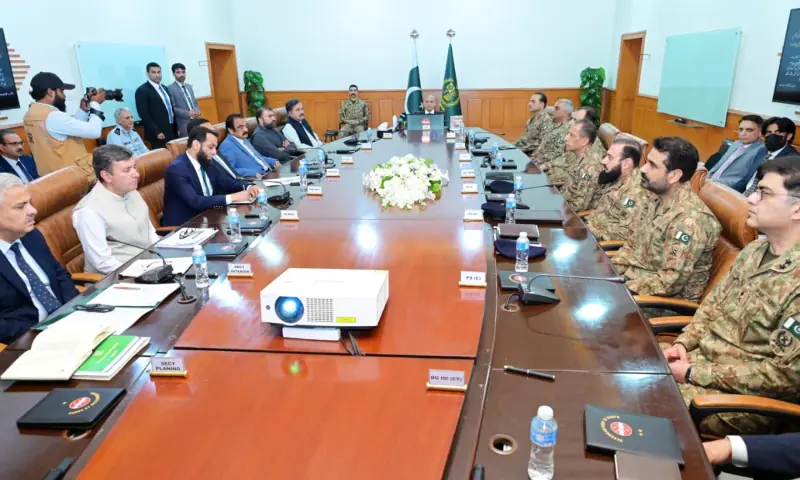
Against this backdrop, Pakistan’s civil-military leadership reaffirmed its resolve to eliminate terrorism across the country and adopted a comprehensive counter-terrorism strategy to dismantle militant networks operating in Balochistan. The state has officially designated these groups as Fitna Al-Hindustan and Fitna Al-Khawarij. Accordingly, the Apex Committee, comprising the country’s civil and military leadership, authorised an intensified intelligence-based campaign under Operation Shaban, complemented by initiatives such as Azm-e-Istehkam.
Operation Shaban was initiated following the killing of 38 police personnel in the Mangi Khel area of Ziarat Division between 5 and 7 July 2026. Pakistan’s armed forces, the Frontier Constabulary and the Balochistan Police are participating in the intelligence-led campaign. According to official reports, more than 100 terrorists were eliminated during the first two weeks of the operation, with a similar number neutralised over the following ten days, extending through the end of July.
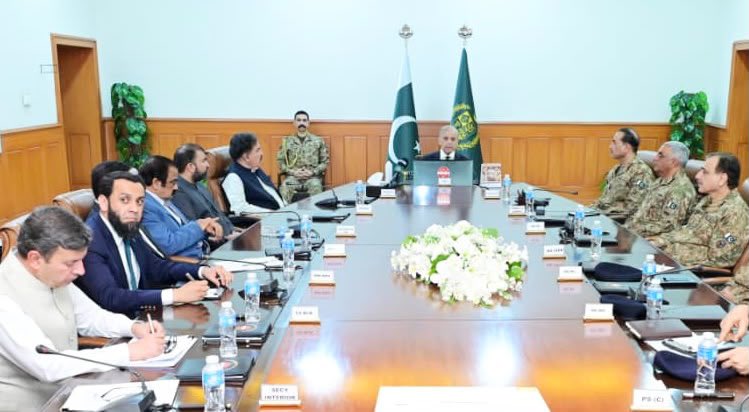
The launch of Operation Shaban reflected the government’s resolve to intensify counter-terrorism efforts in Balochistan through close coordination between the civil and military leadership. Announcing the operation, Prime Minister Shehbaz Sharif reiterated the government’s policy of zero tolerance towards terrorism and emphasised that restoring peace and stability in the province remained a national priority. In subsequent public addresses, he continued to update the nation on the operation and reiterated the government’s commitment to the complete eradication of terrorism.
Chief of Defence Forces (CDF) Field Marshal Asim Munir reaffirmed the military’s commitment to sustaining Operation Shaban until militant networks and infrastructure are fully dismantled. Addressing the 20th National Workshop on Balochistan at GHQ, Rawalpindi, he described Balochistan as Pakistan’s “crown jewel” and emphasised its strategic importance to the country’s security and development. Reiterating the armed forces’ uncompromising stance against terrorism, he declared, “Absolutely no mercy for the enemies,” adding that foreign-sponsored proxies would be defeated through a firm and decisive response.
Alongside counter-terrorism operations, the federal and provincial governments are pursuing development initiatives to transform Balochistan’s socioeconomic landscape through an inclusive, people-centric approach. Endowed with abundant natural resources and strategically located at the crossroads of regional trade, Balochistan holds immense potential for economic growth. Above all, its resilient and patriotic people remain the province’s greatest asset and the foundation for its long-term peace, stability and prosperity.
Public cooperation has played an important role in the success of ongoing counter-terrorism operations. Intelligence provided by local communities has significantly enhanced the effectiveness of law enforcement agencies in identifying, tracking and dismantling terrorist networks across the province.
The government’s counter-terrorism strategy rests on close coordination between the civil and military leadership, supported by the armed forces, intelligence services and law enforcement agencies. Pakistan’s leadership has reiterated that counter-terrorism operations will continue until militant networks and their support infrastructure are dismantled, creating the conditions for lasting peace, stability and socioeconomic development in Balochistan.
Many countries have successfully contained or defeated insurgencies through a combination of sustained security operations and effective diplomacy. Pakistan has similarly complemented its counter-terrorism efforts with active diplomatic engagement at international forums, including the United Nations Security Council. Under the UN Security Council’s Resolution 1267 sanctions regime, Pakistan and China have supported efforts to designate the Balochistan Liberation Army (BLA) and other militant groups, leading to measures such as asset freezes, travel bans and arms embargoes against designated entities.
Public cooperation has played an important role in the success of ongoing counter-terrorism operations.
History demonstrates that even the most persistent insurgencies can be defeated through a combination of sustained security operations, effective intelligence, political resolve and socioeconomic development. Countries such as Sri Lanka, the United Kingdom and the Philippines have, through different approaches and over varying periods, significantly weakened or brought long-running insurgencies under control. Pakistan’s leadership remains confident that the Balochistan Liberation Army (BLA) and other militant groups will ultimately meet a similar fate. While hostile propaganda may seek to distort realities on the ground, lasting peace will be secured through resilient institutions, public cooperation and continued investment in Balochistan’s development. With security, stability and economic progress reinforcing one another, Balochistan is well positioned to realise its immense potential as a gateway to regional connectivity and a cornerstone of Pakistan’s future prosperity.

The writer has a diverse career as a medical doctor, writer, and businessman across multiple countries, with a special interest in research and narrative building.