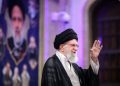

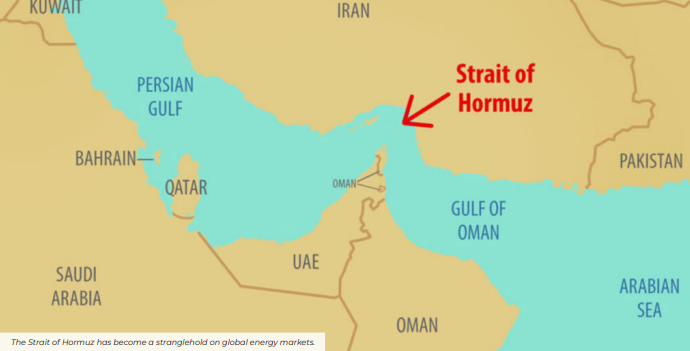
In late February 2026, the United States and Israel launched Operation Epic Fury, a large-scale assault aimed at crippling Iran’s nuclear and military leadership, striking over 1,250 targets within forty-eight hours, including an elementary school full of children, and killing Supreme Leader Ayatollah Ali Khamenei. Iran responded swiftly with a coordinated and sustained campaign of ballistic missile and drone attacks on Israeli cities and American bases across the Gulf, demonstrating significant preparedness and operational depth. By the fourth week, many global assessments indicated that Iran had held its ground militarily and leveraged its control over the Strait of Hormuz to exert substantial pressure on the global economy, complicating efforts by its adversaries to achieve a decisive outcome.
The economic aftershocks
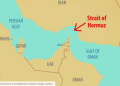
The Strait of Hormuz, through which roughly one-fifth of global oil supplies pass, became the central pressure point of the conflict when Iranian forces effectively disrupted tanker traffic in its opening days, sending shockwaves through the global economy. Oil prices surged sharply, but the crisis extended far beyond energy markets. Significant damage to Qatar’s energy infrastructure, including Ras Laffan Industrial City and key transport hubs like Hamad International Airport, triggered widespread disruption across global supply chains, exposing the vulnerability of interconnected systems.
Pakistan stepped into the vacuum left by traditional mediators when Qatar and Oman were no longer able to operate as neutral channels.
The downstream effects quickly spread across critical sectors. Shortages in petrochemical feedstocks began to affect pharmaceutical production, while disruptions to fertiliser supplies threatened agricultural output and food security, particularly in developing countries. At the same time, heightened risks in the Gulf drove up shipping insurance costs and forced major trade rerouting, adding delays and expenses to global commerce. Even as limited traffic resumed through the strait, the conflict fundamentally altered market dynamics, with long-term economic damage and slower global growth widely anticipated.
The mediator vacuum and Pakistan’s ascent
In past regional crises, mediation often fell to Gulf states such as Oman and Qatar, whose neutrality and diplomatic agility enabled them to bridge difficult divides. In this conflict, however, both countries were directly affected by Iranian retaliation. Critical infrastructure in Qatar, including facilities linked to American military operations, came under attack, while key Omani ports were also struck. As a result, both states were effectively removed from their traditional intermediary roles, creating a vacuum at a moment of acute escalation. In the absence of credible alternative intermediaries, the responsibility of sustaining communication began to shift toward actors with both the capacity and the incentive to prevent further escalation.
Pakistan stepped into this gap, driven primarily by strategic necessity rather than diplomatic ambition. A destabilised Iran posed immediate risks for Pakistan, including cross-border insecurity, sectarian tensions, and broader regional instability. With a significant Shia population and deep socio-cultural linkages to Iran, any collapse or prolonged chaos across the western border carried potential domestic repercussions. Additionally, security assessments highlighted the risk of a fragmented Iran becoming a staging ground for hostile activity, potentially compounding pressures across multiple fronts. These considerations made active diplomatic engagement imperative.
At the same time, Pakistan had to carefully manage its longstanding security relationship with Saudi Arabia, which had itself been targeted during the conflict. Despite these sensitivities, there appeared to be an understanding in Riyadh that Pakistan’s mediation efforts were aligned with wider regional stability and did not undermine bilateral ties.
Pakistan’s diplomatic engagement extended beyond Islamabad, involving sustained shuttle diplomacy across Riyadh, Ankara, and Tehran to preserve the fragile ceasefire framework before and after the first round of talks.
Pakistan’s effectiveness as a mediator stemmed from a convergence of relationships that allowed it to engage all sides with credibility. Direct channels with the United States enabled high-level communication at a critical juncture, while longstanding ties with Iran — including diplomatic representation of Iranian interests in Washington — provided institutional familiarity and trust. Simultaneously, deep economic, military, and diaspora linkages with Gulf states allowed Pakistan to maintain credibility across the Arab world. Broader relationships with countries such as Turkey, China, and Central Asian states further enhanced its diplomatic reach, enabling it to align positions and build support for a negotiated process. This combination positioned Pakistan among the few actors able, at that moment, to engage all sides with credibility and facilitate a structured dialogue.
The mediation effort itself was coordinated across Pakistan’s civilian and military leadership, including Prime Minister Shehbaz Sharif, Chief of Defence Forces Field Marshal Asim Munir and Deputy Prime Minister and Foreign Minister Ishaq Dar. Political outreach, security engagement, and diplomatic management were conducted in parallel, allowing Pakistan to facilitate indirect talks and sustain momentum toward de-escalation. This whole-of-state approach enabled Islamabad to position itself at the centre of the diplomatic process at a time when few other actors were able to operate across all sides simultaneously.
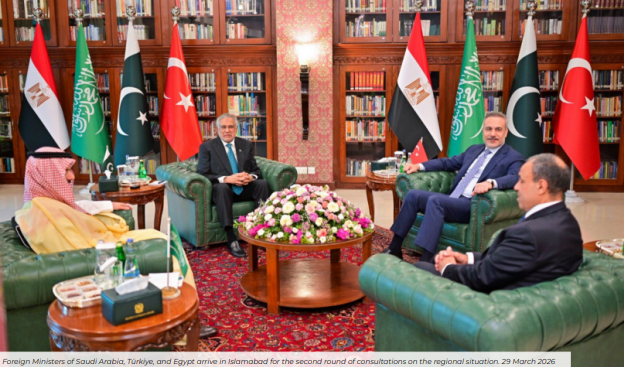
In the weeks preceding the Islamabad talks, Pakistan was already deeply embedded in intensive regional consultations. It participated in high-level engagements in Saudi Arabia and hosted a quadrilateral meeting in Islamabad involving the foreign ministers and senior officials of Saudi Arabia, Türkiye, and Egypt, designed to coordinate positions on de-escalation ahead of direct US–Iran engagement.
The Islamabad Talks: opening the off-ramp
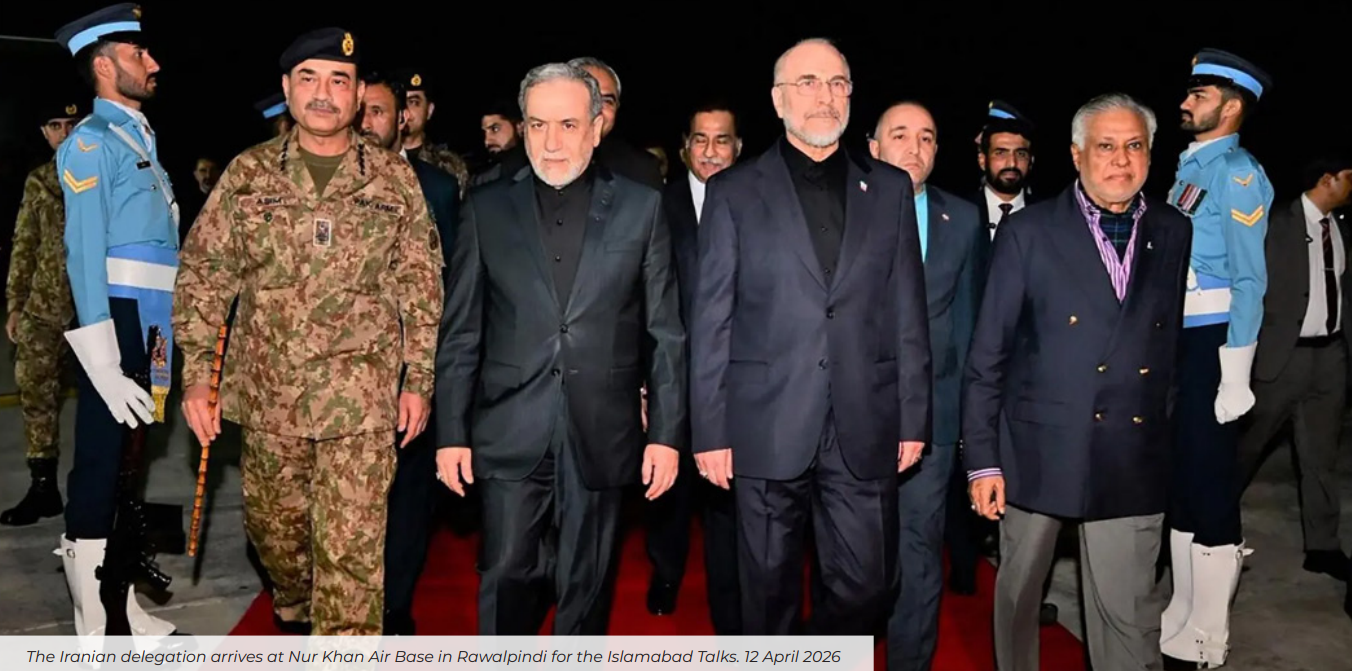
On 11-12 April 2026, Islamabad hosted the first structured round of indirect US–Iran talks since 1979 at the Serena Hotel, with Vice President JD Vance leading the American delegation and Speaker Mohammad-Bagher Ghalibaf representing Iran. Pakistan acted as the sole mediator, facilitating nearly 21 hours of indirect engagement on key issues including the Strait of Hormuz, sanctions relief, nuclear constraints, and broader regional de-escalation. The round was not designed to produce a formal agreement; rather, its purpose was to test whether a viable ceasefire framework and negotiating channel could be sustained. Although no document or MoU was signed, both sides informally agreed to maintain the ceasefire and continue engagement with the mediator.
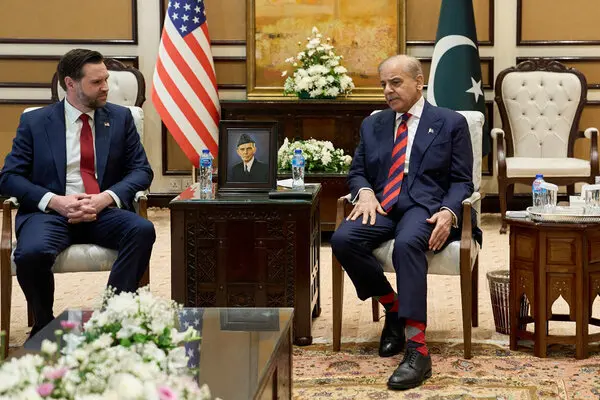
Following this initial breakthrough, Pakistan intensified regional diplomacy to stabilise the process. The Prime Minister undertook high-level visits to Saudi Arabia, Qatar, and Turkey, while the Chief of Defence Forces, Field Marshal Asim Munir, engaged directly with the Iranian leadership. These parallel efforts helped reinforce confidence in the ceasefire mechanism and secure continued political buy-in from key regional stakeholders.
Only after these diplomatic consultations did preparations for a second round of talks begin in Islamabad. Despite mixed public signalling and lingering mistrust between Washington and Tehran, backchannel communication has remained active and increasingly structured. As a result, both sides are now expected to reconvene in Islamabad in the coming days, with Pakistan continuing to play a central coordinating role in preserving momentum and preventing the collapse of the fragile diplomatic track.
The road ahead
Pakistan has done what Pakistan does best when given the opportunity and when its vital interests are engaged. We have leveraged our strengths — our relationships, our geography, our institutional memory, and our strategic position — to open a space where warring parties can take an off-ramp from catastrophe.
We have not imposed a solution. We have not dictated terms. We have not presumed to tell great powers how to resolve their differences. We have simply provided a venue, a channel, and a credible guarantee that what is said in Islamabad will be conveyed accurately and received seriously. We have demonstrated that a nation often defined by its perceived weaknesses can, when the moment demands, summon its deepest strengths to serve the cause of peace.
The world economy, battered and scarred, breathes a tentative sigh of relief. The Strait of Hormuz, though still tense, sees the first cautious movements of commercial traffic. The spectre of a wider regional war, a conflagration that could have drawn in multiple states and non-state actors, has receded, at least for now.
But the work is not complete. The ceasefire is fragile. The gaps between the parties remain wide. The second round of talks will test the limits of diplomacy as severely as the first, and perhaps more so, as the parties move from establishing a process to grappling with substance.
Pakistan has built the bridge. We have illuminated the off-ramp. We have shown the world that even in its hour of deepest peril, a path to understanding exists.
The ball is now in the courts of Washington and Tehran. How they play it will determine whether the Islamabad talks become a footnote in a continuing war or the first chapter of a more stable Middle East.
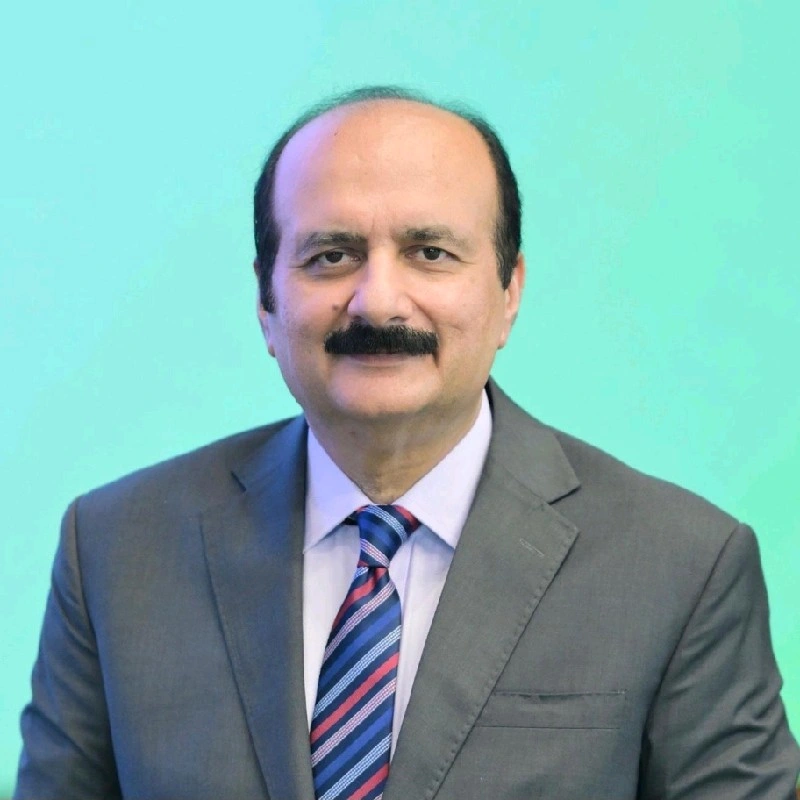
Chairman Prime Minister’s Youth Programme, Vice President PMLN Punjab, Former Minister School & Higher Education, Sports & Youth, Law & Parliamentary Affairs, Archaeology & Tourism and Deputy Speaker Punjab Assembly.