
The 2026 elections in Azad Jammu and Kashmir (AJK) constitute an important development in the region’s recent democratic and political trajectory. Conducted amid political unrest, security concerns, delayed polling and intense competition, the elections tested not only the popularity of political parties but also their organisational capacity, leadership credibility and ability to respond to changing public expectations.
The electoral outcome was decisive. Of the 38 directly elected constituencies decided by late August, Pakistan Muslim League-Nawaz (PML-N) secured 25 seats, while Pakistan Peoples Party (PPP) won 12. An independent member subsequently aligned with PML-N, while the party also secured six of the eight reserved seats, giving it a commanding position in the Legislative Assembly.
The political transition was completed on 28 August 2026, when PML-N’s Barrister Syed Iftikhar Ali Gillani was elected prime minister of AJK with 30 votes to 14 for PPP candidate Sardar Mukhtar Ahmed Abbasi.
The result marks PML-N’s return to the centre of political power in AJK after approximately a decade. More significantly, it reflects renewed public confidence in a political narrative centred on stability, development, administrative effectiveness and stronger coordination between regional and federal institutions.
Elections under exceptional circumstances
The elections were conducted in three phases on 27 July, 2 August and 10 August. The phased arrangement was largely shaped by security and law-and-order considerations, particularly in Poonch Division, where polling in seven of 11 constituencies was postponed.
The wider political environment was equally challenging. Public mobilisation and protests associated with the Joint Awami Action Committee (JAAC), political tensions, and competing narratives about governance and representation created an electoral environment far from a routine democratic contest.
From a policy perspective, this context is important. An election conducted amid institutional and social pressure places additional responsibility on the resulting government. Political legitimacy must subsequently be consolidated through responsive governance, reconciliation, institutional credibility and delivery of public services.
The continuation of the electoral process despite these difficulties nevertheless demonstrated the resilience of constitutional mechanisms. The decisive question after the election is therefore not simply who won, but what the mandate now requires from those who have received it.
Parliamentary dominance
PML-N’s electoral performance developed progressively across three phases of the election. Its strong showing in the Mirpur Division during the first phase established early momentum. The second phase, covering Muzaffarabad and refugee constituencies, reinforced the trend and demonstrated that the party’s support was not confined to a single geographical area. The third phase was more complicated because of security-related postponements. Nevertheless, by that stage the PML-N had already established a substantial parliamentary advantage.
This progression highlights an important feature of contemporary electoral politics: organisational capacity remains as important as political popularity. Winning constituencies across geographically diverse areas requires local leadership, effective candidates, voter mobilisation, campaign coordination and sustained political communication. PML-N’s performance indicates that its organisational network was able to convert its broader political narrative into electoral strength.
Why did PML-N prevail?
The PML-N’s victory cannot be attributed to one factor. It appears to have resulted from the interaction of leadership, organisational strength, governance credentials, national connectivity and public demand for stability.
Muhammad Nawaz Sharif’s political influence remains central to the party’s identity. For PML-N supporters, his leadership represents political experience and a development-oriented vision associated with infrastructure, connectivity, economic growth and long-term planning. His political narrative has consistently linked political stability with development and improved living standards.
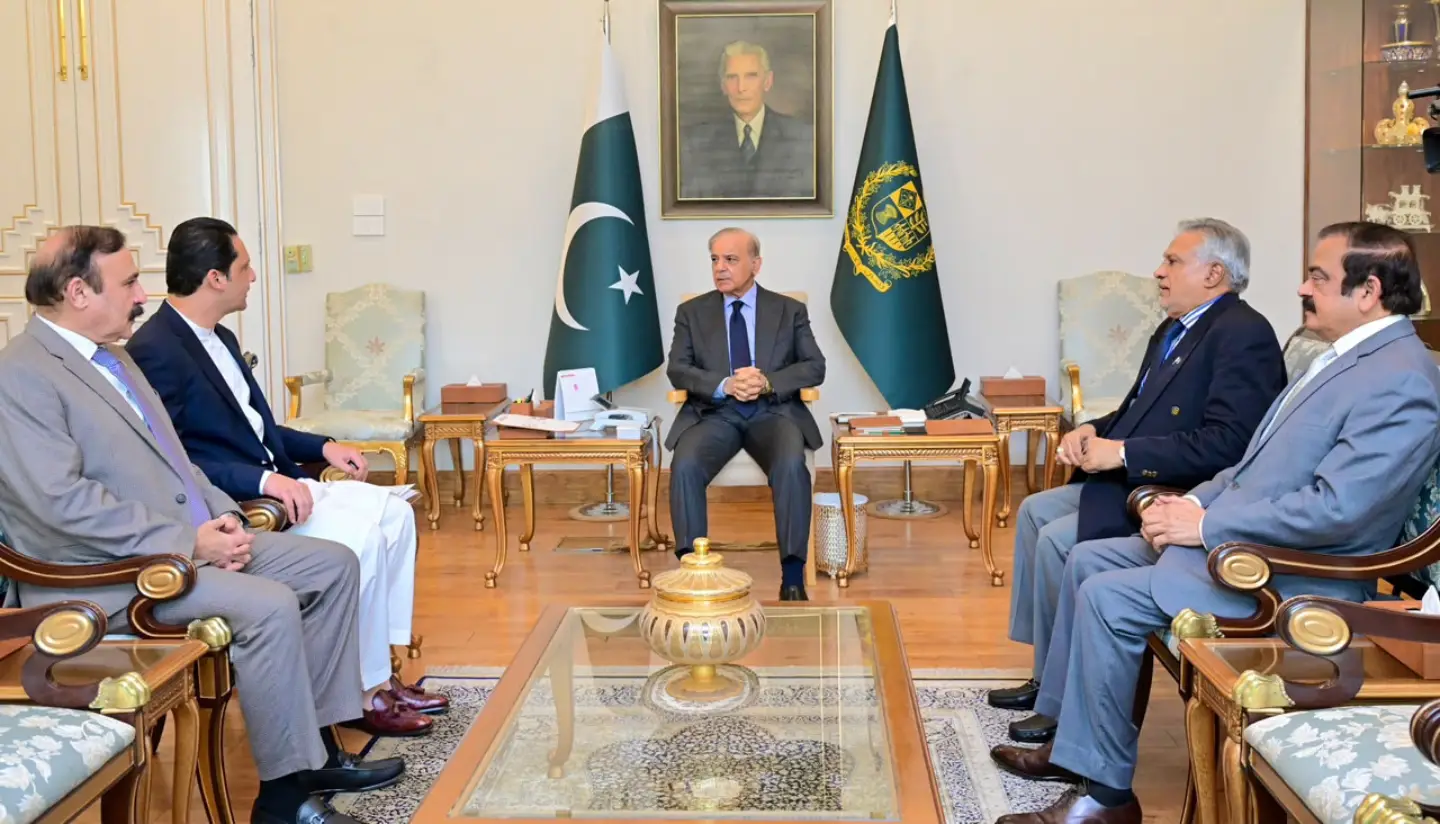
At the federal level, Prime Minister Muhammad Shehbaz Sharif represents the party’s administrative and implementation-oriented dimension. His governance image, particularly its emphasis on execution and development, has strengthened PML-N’s ability to present itself as a party capable of translating political commitments into governmental programmes.
This national-regional connection was particularly relevant in AJK. A government aligned with the federal government can potentially benefit from improved institutional coordination, resource mobilisation and development planning. While such alignment does not automatically guarantee better governance, it creates an opportunity for more coherent policy implementation.
The wider political environment also favoured a stability-oriented narrative. Following prolonged political tension and public mobilisation, a segment of the electorate appears to have prioritised administrative continuity, economic opportunity and practical governance over political confrontation. PML-N successfully positioned itself within this political space.
PPP’s performance, however, should not be overlooked. With 12 of the 38 directly elected seats, it remains a significant opposition force. The election therefore represents PML-N dominance rather than the disappearance of political competition. A functioning opposition remains essential for parliamentary scrutiny, accountability and democratic balance.
From winning votes to delivering governance
The election of Barrister Syed Iftikhar Ali Gillani as prime minister transformed PML-N’s electoral advantage into executive authority. His stated emphasis on employment, merit-based recruitment, transparency, digital economy and action against corruption provides an initial framework against which his government can be evaluated.
The transition from electoral victory to governance is, however, the most difficult stage of the political process. The new government must convert public confidence into measurable outcomes.
Five policy areas deserve particular attention.
Education: AJK requires stronger investment in schools, higher education, technical training and market-oriented skills. Education should be treated as an investment in human capital and economic productivity.
For the PML-N, the result marks a major political comeback. It grants the leadership political space to prove that institutional coordination and stability can deliver tangible development in AJK.
Healthcare: Improving access to quality healthcare, specialised treatment and modern medical facilities should remain a central governance priority. Reducing regional disparities can directly improve public welfare.
Tourism and sustainable development: AJK’s mountains, valleys, rivers and cultural heritage provide substantial economic potential. A professionally managed tourism strategy can generate employment and investment, but tourism expansion must be accompanied by environmental protection and sustainable planning.
Youth employment and digital economy: The region’s young population requires opportunities beyond traditional public-sector employment. Technical skills, entrepreneurship, information technology and private-sector investment should form part of a broader employment strategy.
Merit, transparency and institutional reform: Public confidence ultimately depends on institutional credibility. Transparent recruitment, merit-based decision-making, accountable administration and effective public-sector monitoring can strengthen trust in government.
These priorities also provide a useful policy framework for evaluating the new administration beyond political rhetoric.
Decisive mandate, greater responsibility
The significance of the 2026 election lies in the scale of political confidence reflected in the seats the PML-N won. The party successfully combined national leadership, organisational strength and a governance-oriented narrative to secure a commanding parliamentary position.
For the PML-N, the result marks a major political comeback. It grants the leadership, under PML-N President Nawaz Sharif and Prime Minister Shehbaz Sharif, vital political space to prove that institutional coordination and stability can deliver tangible development in AJK.
Yet the strongest mandate carries the greatest responsibility.
The real test will now be whether electoral confidence can be transformed into public confidence through better schools, stronger healthcare, employment opportunities, sustainable tourism, merit, transparency and effective institutions.
The 2026 election has therefore closed one political chapter and opened another. PML-N has returned to political leadership in AJK, but the more consequential journey has only begun.

The writer, who holds an M.Phil in English Literature, is an educationist, crime analyst, and youth commentator affiliated with PML-N.